
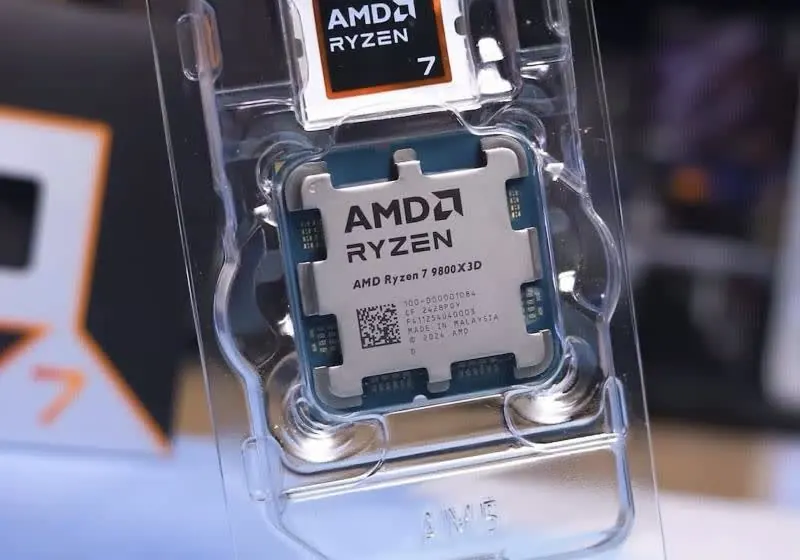
AMD has reached another milestone in its rivalry with Intel. According to the analytics firm Mercury Research, it has for the first time in history surpassed the 30% share threshold in the x86 processor market for personal computers, covering both desktops and laptops.
In its report, Mercury Research stated that AMD's share of x86 processor shipments for PCs reached 30.3% in the second quarter. Intel thus holds 69.7% of the market.
Compared to the first quarter, when AMD recorded 29.6%, this represents an increase of 0.7 percentage points. Compared to the second quarter of 2025, when the company led by Lisa Su held 23.9%, its share has risen by 6.4 percentage points over the year. Growth occurred in both desktop and laptop processors.
The data pertains to the number of processors shipped into the distribution channel, not the number of computers people actually use. It also differs from the revenue share. In that regard, AMD had already crossed the 30% threshold earlier, when it reached 31.4% of PC processor revenue in the first quarter.
Strong quarter for the entire market
The milestone came at a time when processor shipments were unexpectedly strong. Mercury Research, in a note shared by Tae Kim, said that actual results for both x86 and ARM processors rose significantly, with the entire market growing by more than ten percent quarter over quarter. The firm added that this is well above the usual seasonal trends, which typically expect a slight quarterly decline.
A separate report from Jon Peddie Research shows a 9.4% quarter-over-quarter growth in the PC processor market, although shipments fell 1.1% year over year. The firm noted that the second quarter is usually a weaker period, as PC makers and retailers sell off old inventory.
Jon Peddie Research further stated that processor shipment numbers and revenue looked solid for the quarter, but part of the growth reflects inventory replenishment by PC makers rather than pure demand strength. The firm reminded that the first quarter was challenging for Intel in terms of shipments, and manufacturer inventories fell then, so the current increase merely restores normal levels.
Impact of the memory crisis and AMD's results
The market continues to feel the effects of rising memory prices. Increasing DRAM and SSD prices are making new computers and upgrades more expensive, especially in the DIY segment. Jon Peddie Research said that many enthusiasts moved purchases to the fourth quarter of 2025 ahead of expected price increases, so retail demand remained weak in the second quarter, even though manufacturers were replenishing depleted inventories.
AMD's own results support reports of growing demand for Ryzen processors. The PC processor division generated $3.1 billion in the second quarter, a year-over-year increase of 23%. CEO Lisa Su said that Ryzen Pro processor sales rose more than 50% compared to the previous year, and the company gained new enterprise customers.
Su also said that first-half results were very strong, and although the company expected a market decline in the second half, the market is holding up better than most people anticipated.
Important note: the 30.3% figure refers only to the market split between AMD and Intel for the x86 architecture. It does not include ARM processors, such as Apple Silicon or Qualcomm's Snapdragon chips. Mercury Research estimates that ARM held 14.4% of the broader PC processor market in the first quarter, so AMD has not captured 30% of all processors shipped into computers.